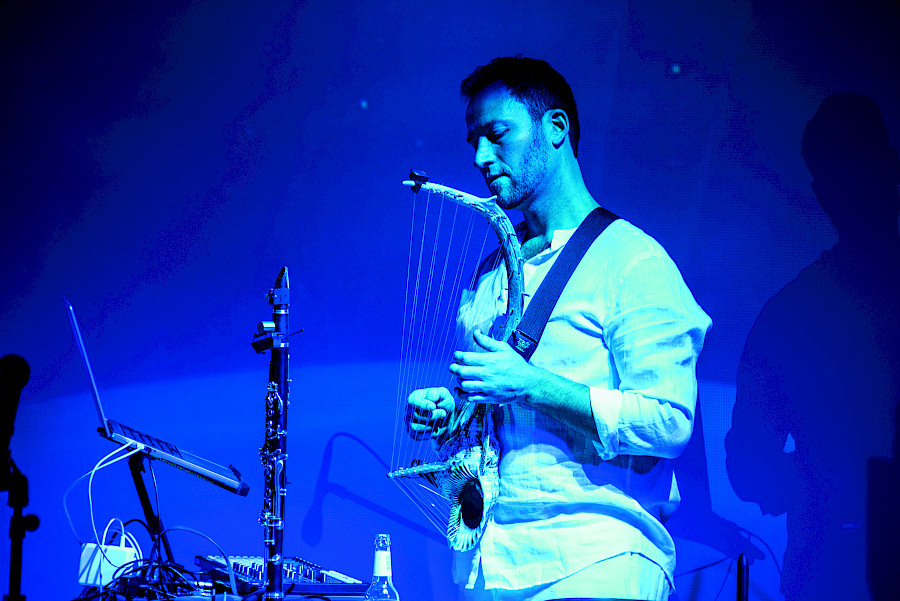
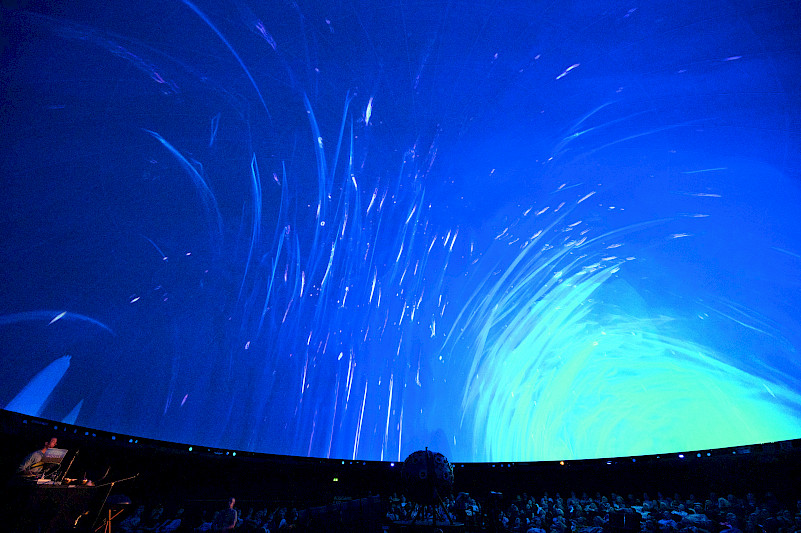
Jushua Sam Miller performing as part of Sounds of the Ocean. Photographed by Manaf Azzam.
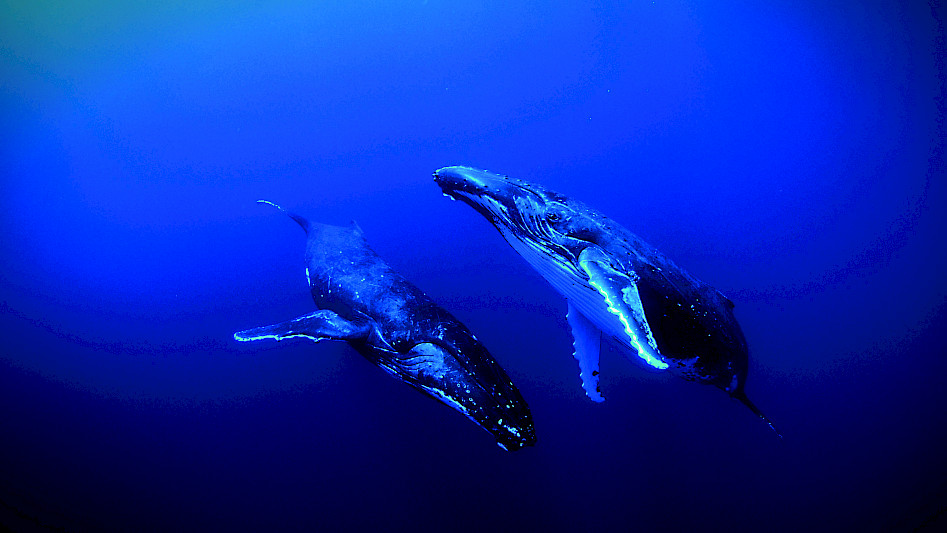
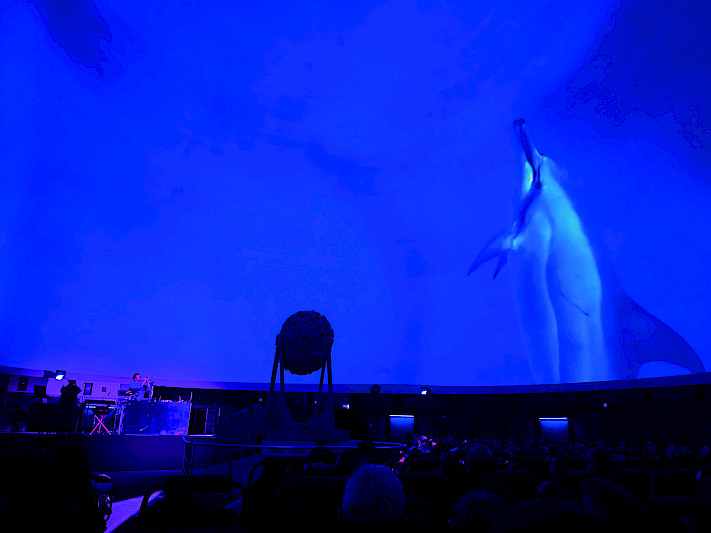
Long before we could see the ocean floor, we could hear it. Joshua Sam Miller has spent years helping people listen in, as founder of Sounds of the Ocean, an immersive experience featuring whale song, underwater ambience, and live music. Born from one evening with a friend, it has since travelled the world, including to N13's Zero Waste exhibition in 2024. We spoke to him about whale song, fatherhood, and what is at stake if we stop listening.
Before the project, there was an idea. What sparked the creation of Sounds of the Ocean?
Sounds of the Ocean was conceived after I was introduced to the sounds of blue and humpback whales in Monterey, California, during the winter of 2019. My friend and colleague, Dr John Ryan of the Monterey Bay Aquarium Research Institute, shared these recordings with me after attending my Nada Yoga class, which focused on the power of sound to calm the mind.
After that deep-listening session in Dr Ryan’s office, I realised that more people needed to hear these whales and feel the power of their sound. The next day, I booked a space to host our first live concert in Santa Cruz, California, and Sounds of the Ocean was born.
Your project debuted at Burning Man. What reaction did you expect, and did it meet your expectations?
Our Burning Man debut was incredibly exciting. We took part in a spatial sound installation inside a structure called the Root Cathedral, organised by the San Francisco Bay Area art collective Seven Flowers.
This was one of our first immersive works using spatial audio, connected to motion sensors so that, as people walked through different parts of the exhibit, they heard different sounds. The space offered a chance to cool down in the hot desert environment, and brought the calming sensations of the ocean to people in the middle of their festival experience.
You studied communications, worked in film, and now play two instruments, dive, and surf. Do you think it all led you here?
Absolutely. If you had asked me at 25 what I would be doing in 10 years, I could never have predicted this. But looking back on the last 30 years of my life, I can see how all the pieces led me exactly to where I am today. I am deeply grateful for all of these opportunities and experiences, which have helped me weave together my passions for art, well-being, the environment, and outdoor recreation.
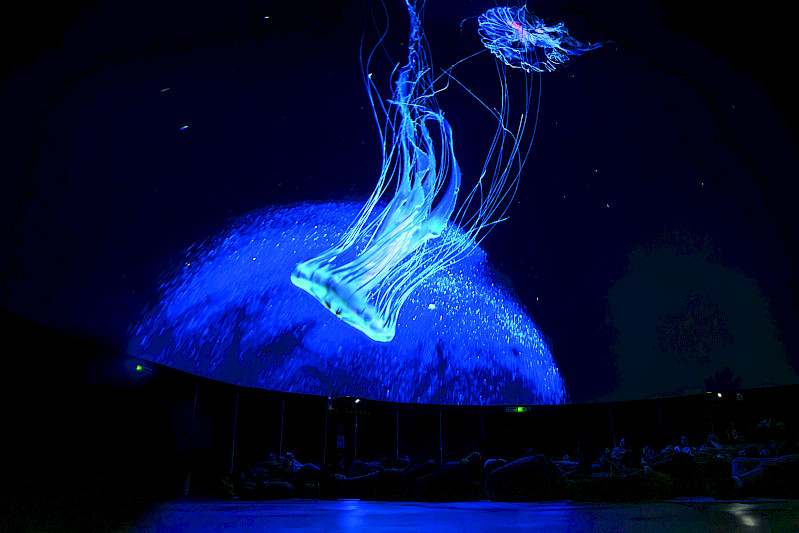
Sounds of the Ocean is a multi-award-winning project. What is the one essential thing you want everyone to take away from the experience?
Most importantly, I want people to slow down, connect, and listen deeply to what the ocean has to say. For me, that is enough. I invite everyone to give it a try and experience the magic and beauty of being underwater, in their own individual way.
If the listening inspires you to help protect the ocean, that is even better. We are happy to point people towards local and global organisations that can help turn interest into action and leave a lasting impact on all life in the sea.
Much of your work is built on the ocean’s beauty, yet you speak openly about its decline. What scares you most about that decline?
What scares me most is the growing disconnection between people in modern society and where we actually come from: the ocean. We already have most of the solutions we need to keep the ocean safe for future generations. We must keep working together, building on the last century of climate activism, to keep this environment clean and safe for our children and our children’s children.
You showed Sounds of the Ocean at our recycling exhibition Zero Waste in Baku in 2024. What do you want people to understand about pollution?
In our project, we focus on two issues related to ocean pollution. The first is ocean noise pollution, something most people know little about but which presents a critical threat that should be taken seriously. Whales and dolphins rely on sound and underwater communication to reproduce, find food, and essentially live their entire lives. If noise from our activities in the maritime world, such as oil and gas exploration, military sonar, and commercial shipping, disturbs this underwater acoustic habitat, we don’t really know what effects this would have.
The second issue we focus on is plastic pollution, because this is something the general public can actually minimise through conscious everyday choices. We often recommend that people reduce their use of plastic, reuse it as much as possible, and recycle it properly. This alone can make a big difference to the ocean and coastal communities, and, with the presence of microplastics, to all of us.
On the podcast, you interview people who study sound and wellness for a living. Has a guest ever told you something that changed how you work?
Yes, absolutely. Every interview I have hosted on the podcast has been inspiring, but one stands out in particular and is something I still reflect on today. Our interview with the late Wallace J. Nichols had a lasting impact on how I think about the significance of our work. He reminded me that many people already know what they could be doing to support the environment, but they need a little motivation to actually do it. This helped shape our messaging around conservation. We do not assume that we know what anyone should do differently. Each person has the ability to make a difference, and it is important to give them the autonomy to make that choice.
There is a paradox in taking a world that is silent to human ears and making it audible. What do you gain in that translation, and what gets lost?
Actually, the ocean is not silent at all. Last winter, while leading trips in Maui, Hawaii, in partnership with the Pacific Whale Foundation, I had the chance to jump into the ocean and listen with my own ears underwater. While scuba diving, I found a spot where I was mostly alone, closed my eyes, and just listened. It was fantastic. It made me want to go back again and again. In that moment, I gained a deeper appreciation for the beauty of life underwater, and it deepened my commitment to the work we are doing to share these sounds with as many people as possible. I don’t think anything is lost in this translation, because this is a non-invasive way to bring the ocean to people who might not otherwise have the chance to experience it themselves.
Most people go to the ocean to look at it. You ask them to listen instead. Why do you think hearing creates empathy faster than seeing?
Sound is the first sense we develop in the womb and the last we lose when we die. I have spent the last 10 years researching, studying, and working with the principles of sound that help us unlock parts of our psyche, emotions, and spirituality. What I have learned is that sound is a more feminine, receptive sense than sight, which is more masculine by nature. Tuning in to this feminine quality of listening naturally deepens our ability to empathise with what we are hearing, with ourselves, and with each other. As with many things in life, finding a balance between all of the senses is essential to living a balanced, wholesome, and healthy life.
If you could preserve only one sound from the ocean forever, knowing everything else would disappear, what would you choose and why?
I would hate to see that day come. This question alone brings up a lot of anxiety, which is really a reminder of how precious life on Earth is.
If the ocean could refuse to be recorded, do you think it would?
No, I do not think so, though I do believe that keeping some of the ocean’s mysteries preserved is important, both to its survival and to ours.
Water holds memory in a way we do not fully understand. Is there a personal memory that lives in the sea for you?
Yes, absolutely. Growing up, my family often took scuba-diving trips together in the waters surrounding North America. Amid the stress of life in the New York metropolitan area, my family was relaxed, connected, and at peace whenever we were together underwater. Those trips showed me how powerful the ocean can be in shaping our well-being, on land and at sea. I still reflect on those trips through all the work we do today.
What is the ocean to you?
The ocean is our planet – it is our history, our home, and the most important resource we have for regulating the effects of climate change. As a musician, I have built a special relationship with underwater creatures, such as whales and dolphins. I find the muted frequencies and enhanced sensitivity to sound underwater deeply inspiring for my creative process. I am so grateful to the singers of the ocean who have allowed me to channel melodies through my instruments in support of their beautiful musicality.
You are a father. What is the first thing you taught, or will teach, your child about the ocean?
It was very important to my wife and me to introduce our son to the ocean at an early age. When she was pregnant, we spent a lot of time in the water, and I believe this helped him become comfortable in the water early in life. Now, at 15 months old, he runs into the sea without hesitation or fear and seems to have a genuine curiosity about coastal environments. We plan to spend the upcoming season back in Hawaii, where we will open our newest Sounds of the Ocean location in Waikiki. I am looking forward to developing this connection further as a family. I think this is an excellent starting point for a life connected to the ocean.
Ten years from now, what would make you feel that this had all been worth it, and what would count as failure?
If, in ten years, we are still able to run Sounds of the Ocean experiences on land or at sea, that will be one of the greatest joys and successes of my life. Most projects have a shelf life of one to three years, but I believe the ocean is a timeless story. The way we have designed this experience leaves so much to the imagination of the audience that I truly believe it can last a very long time. This longevity would allow us to make a real impact on conservation efforts, as well as local environmental activism, everywhere our experience is offered. We are already donating to more than 10 nonprofit conservation organisations on a monthly basis, and I would like to see that number grow at least tenfold, if not more, over the next ten years. Failure is hard to describe, because we often don’t know what it is until it hits us. But I think the only failure with this project would be giving up, and I know we won’t do that.
The ocean is our planet - it is our history, our home, and the most important resource we have for regulating the effects of climate change.